
Royal Stoke University Hospital
Make a £400m hospital campus as stress free as possible
The North Staffordshire NHS Trust required a new masterplan for the old City General Hospital campus bringing together medical facilities from several locations across Stoke onto a single site.
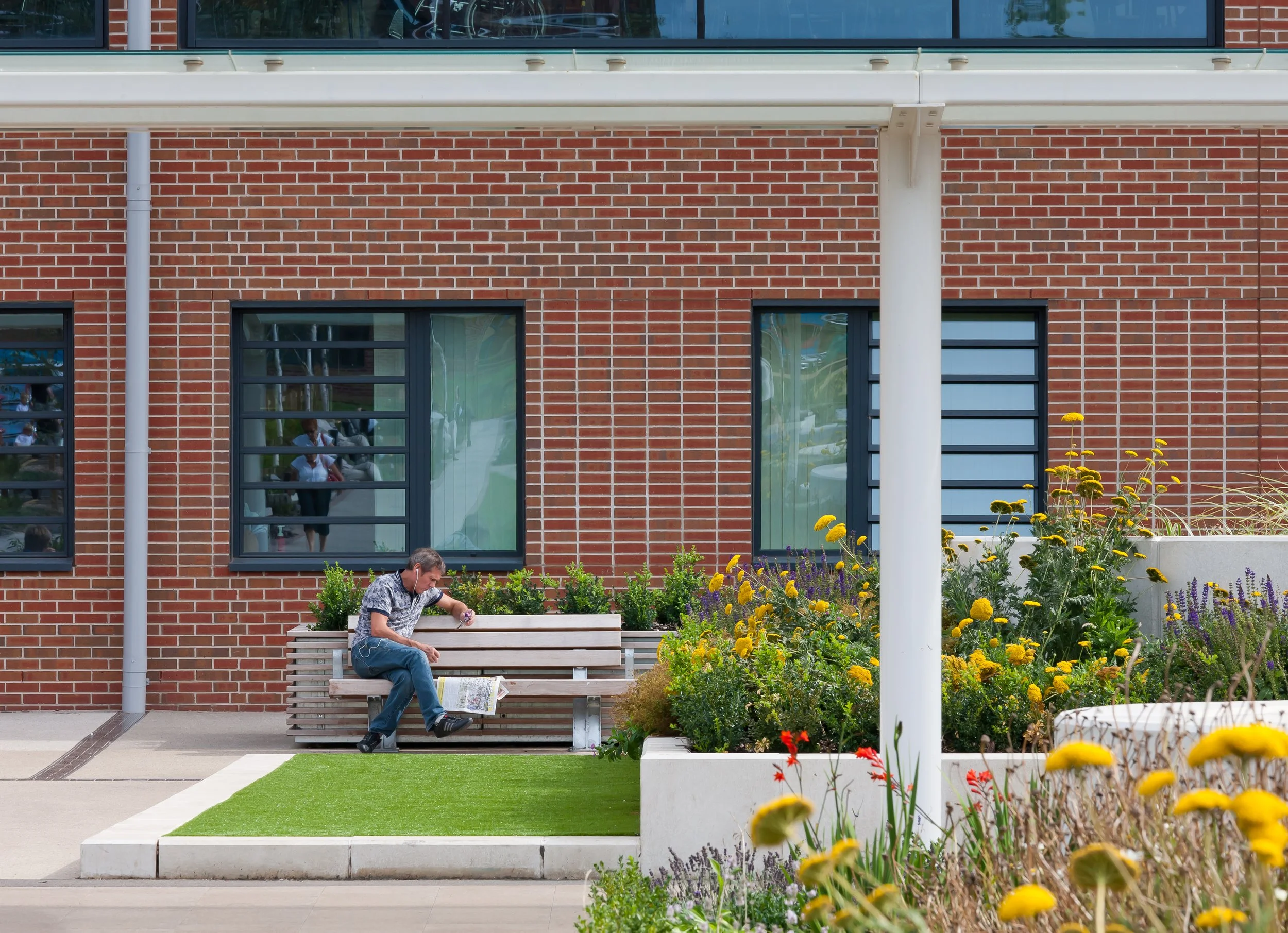
Citing the evidence based findings of Dr Roger Ulrich (who found that recovering gallbladder patients benefited significantly from a view of nature), together with Ryder architects we developed a masterplan concept and landscape philosophy whereby nature was designed into the heart of the hospital campus for patients, staff and visitors.
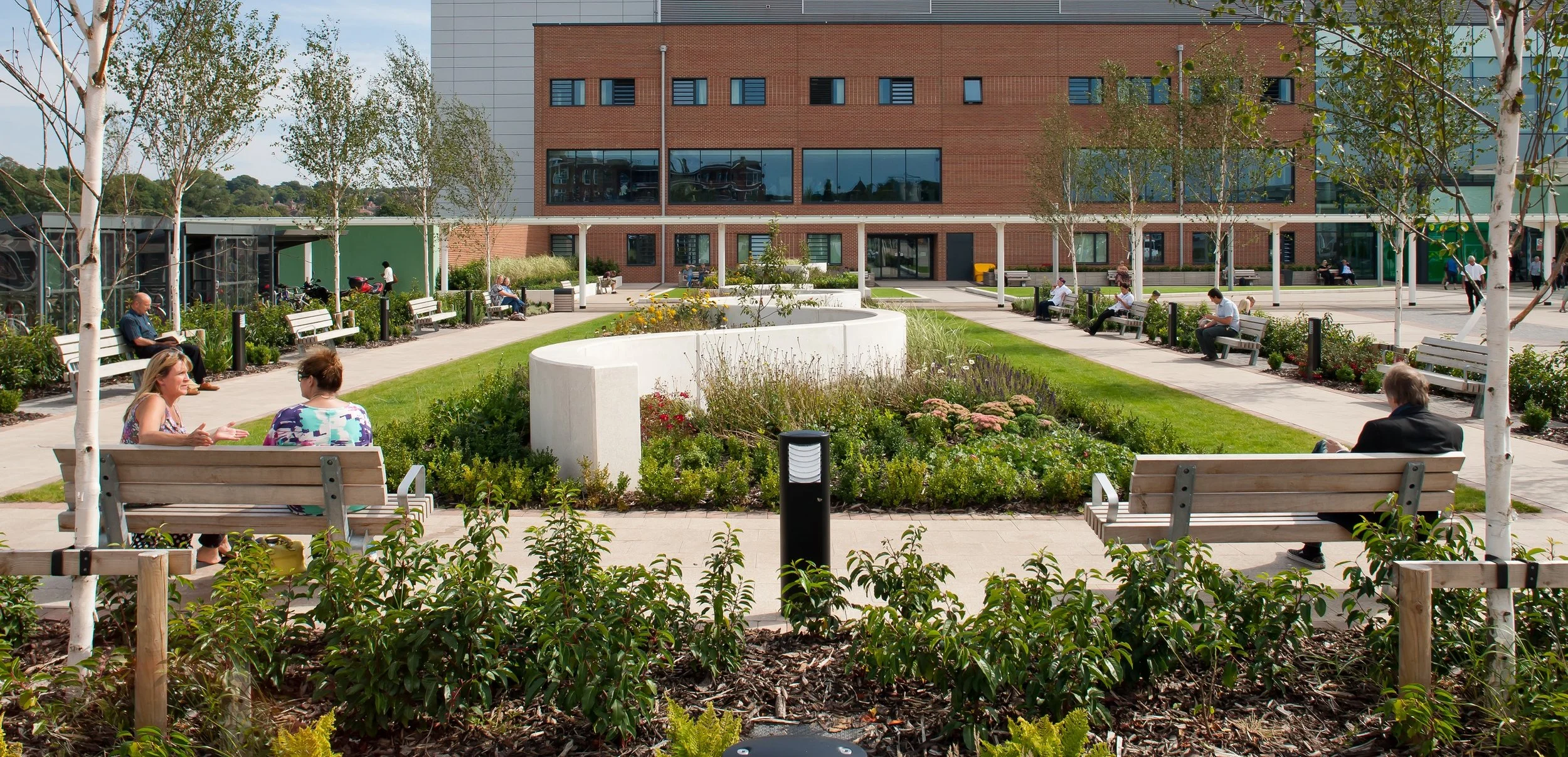
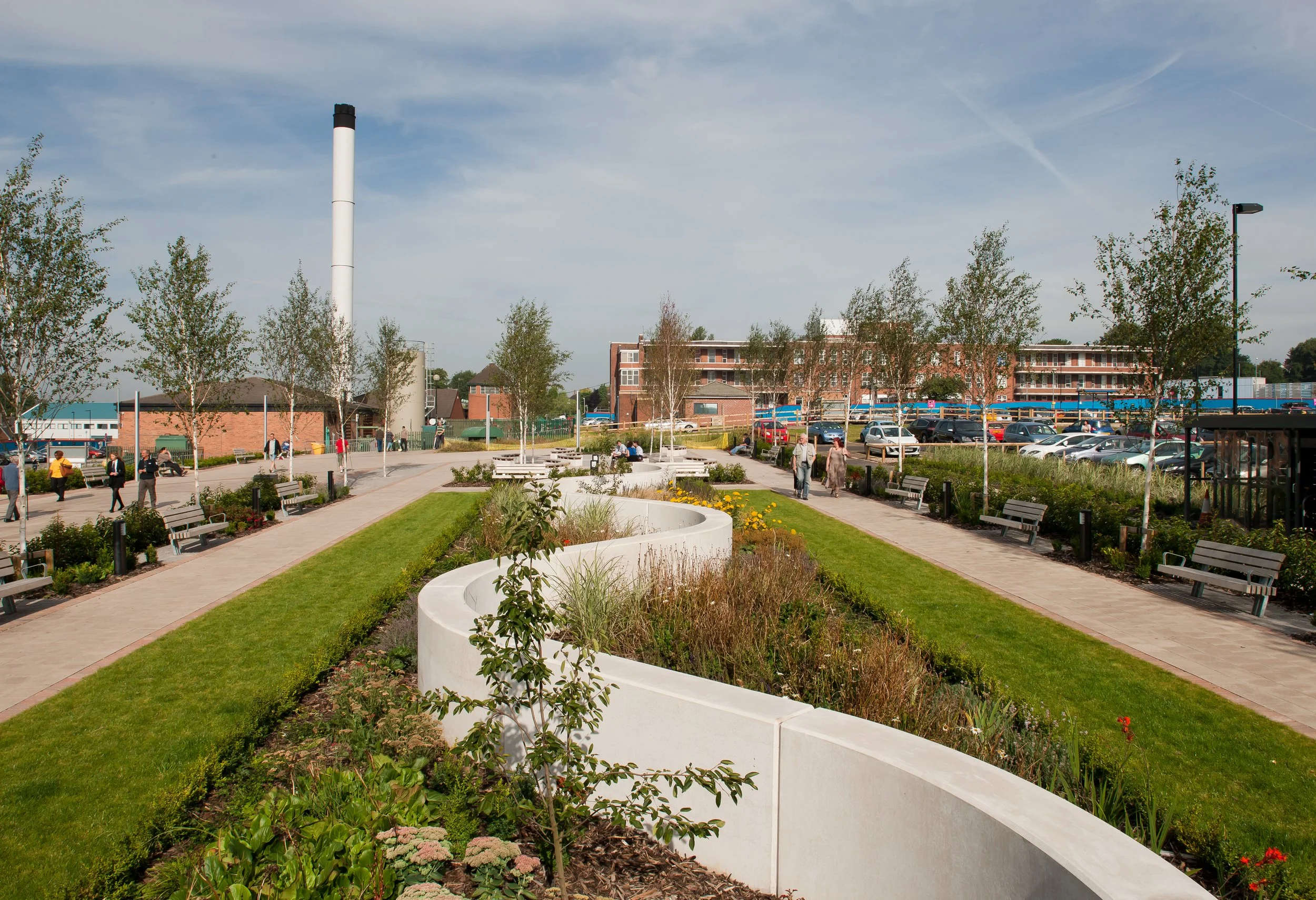
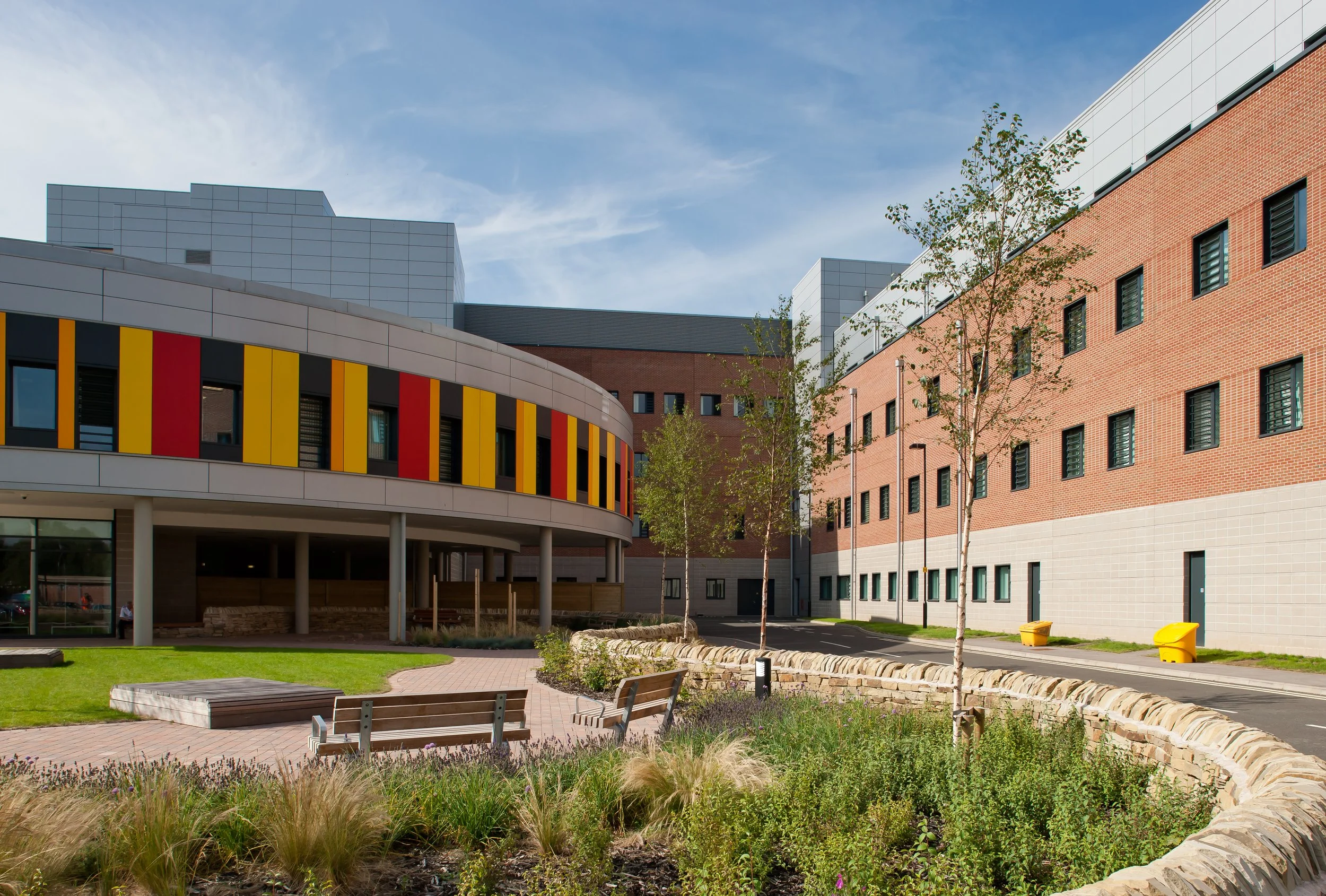
Giving a very clear legibility pattern we organised old and new buildings and primary pedestrian movement around 3 main green spaces with a close connection between internal and external environments.
The Parish Green ‘connects the historic Parish Hospital (Stoke’s first hospital) and Victorian chapel with the quieter inpatients’ entrance. These more reflective and formal gardens are adjacent to the maternity and oncology departments.
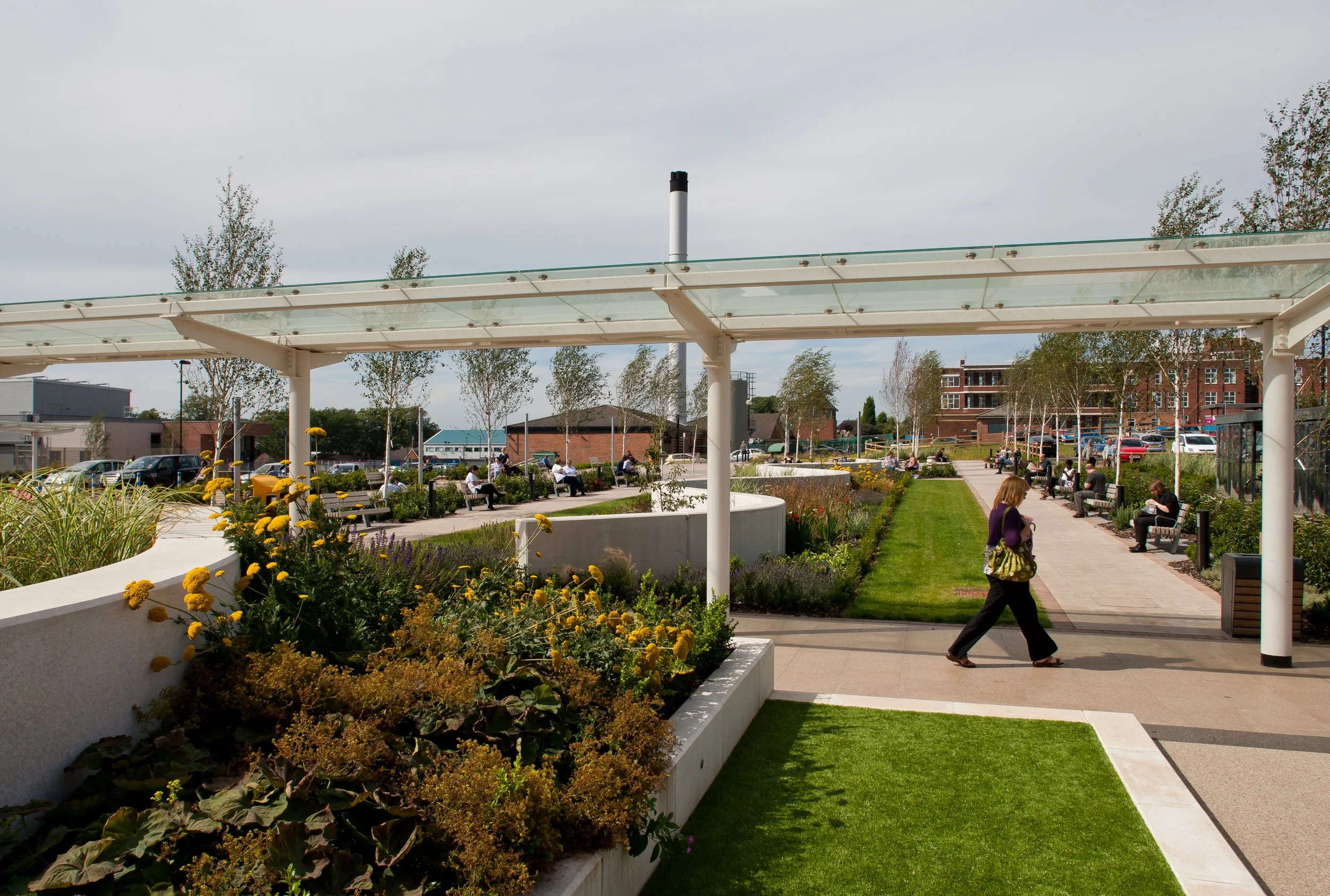
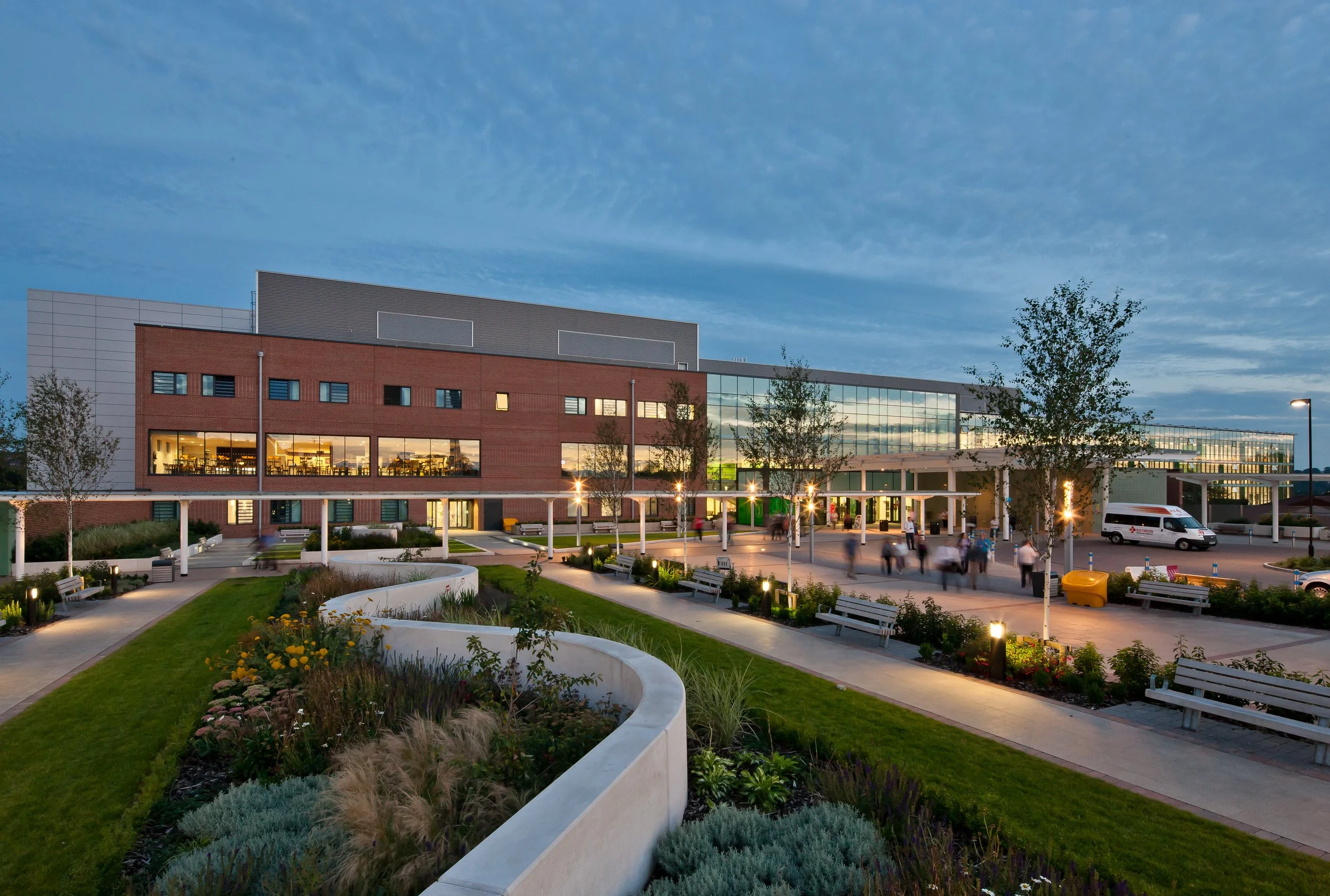
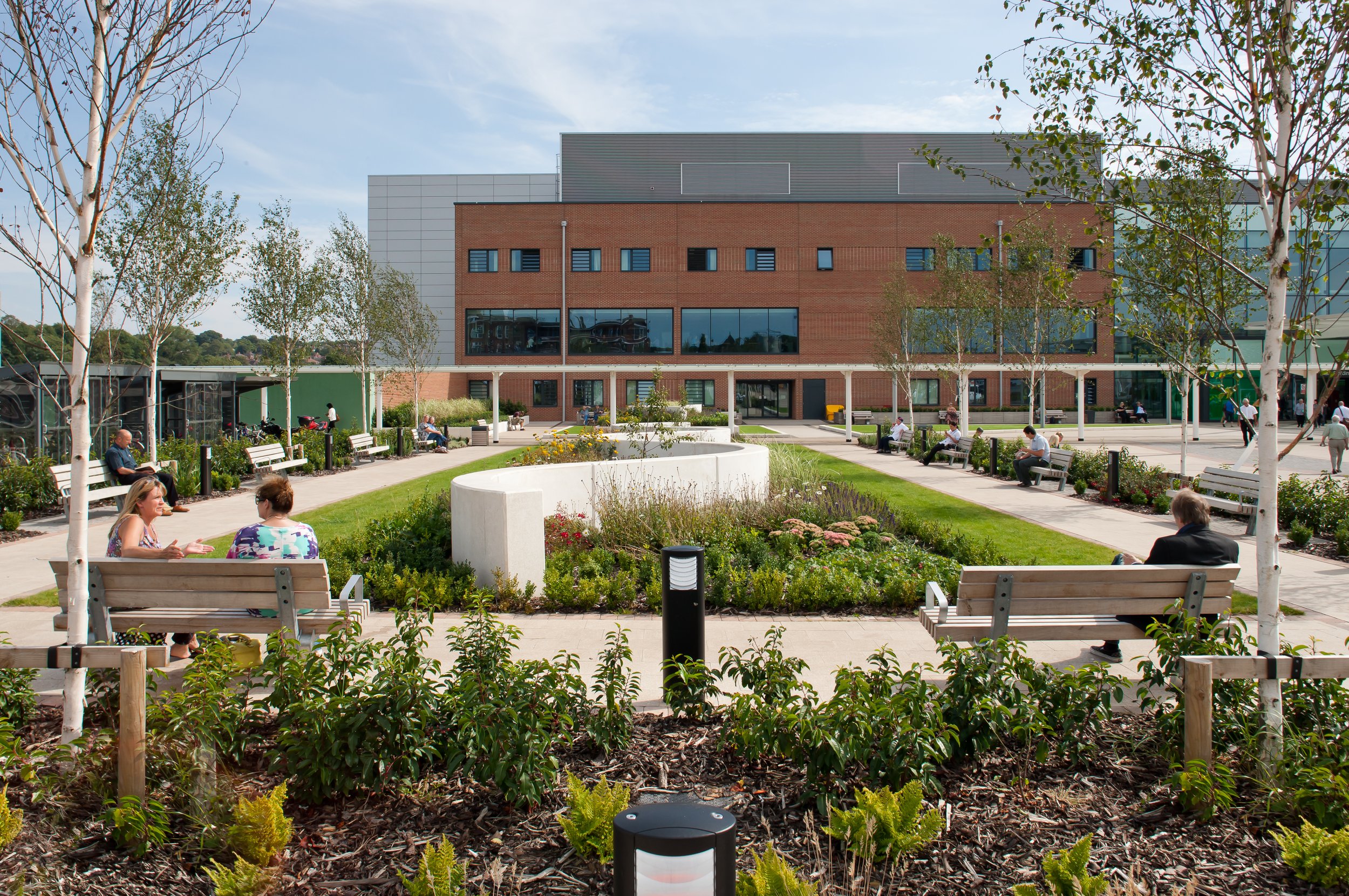
The New Hospital Piazza caters for over 7,000 users every day, is a striking and welcoming arrival landscape to the outpatients entrance intended to instil confidence for patients and visitors alike, decompression for staff and clearly lead pedestrian movement with its contemporary design language and planting with strong seasonal interest, scent and colour.
The 2nd floor restaurant enjoys attractive views of these gardens, contributing to Dr Ullrich’s healing views of vegetation.
What is however not obvious is that one third of the piazza is on podium with functioning hospital workings below and significant technical difficulties overcome to create this seamless landscape with vertical and horizontal challenges.
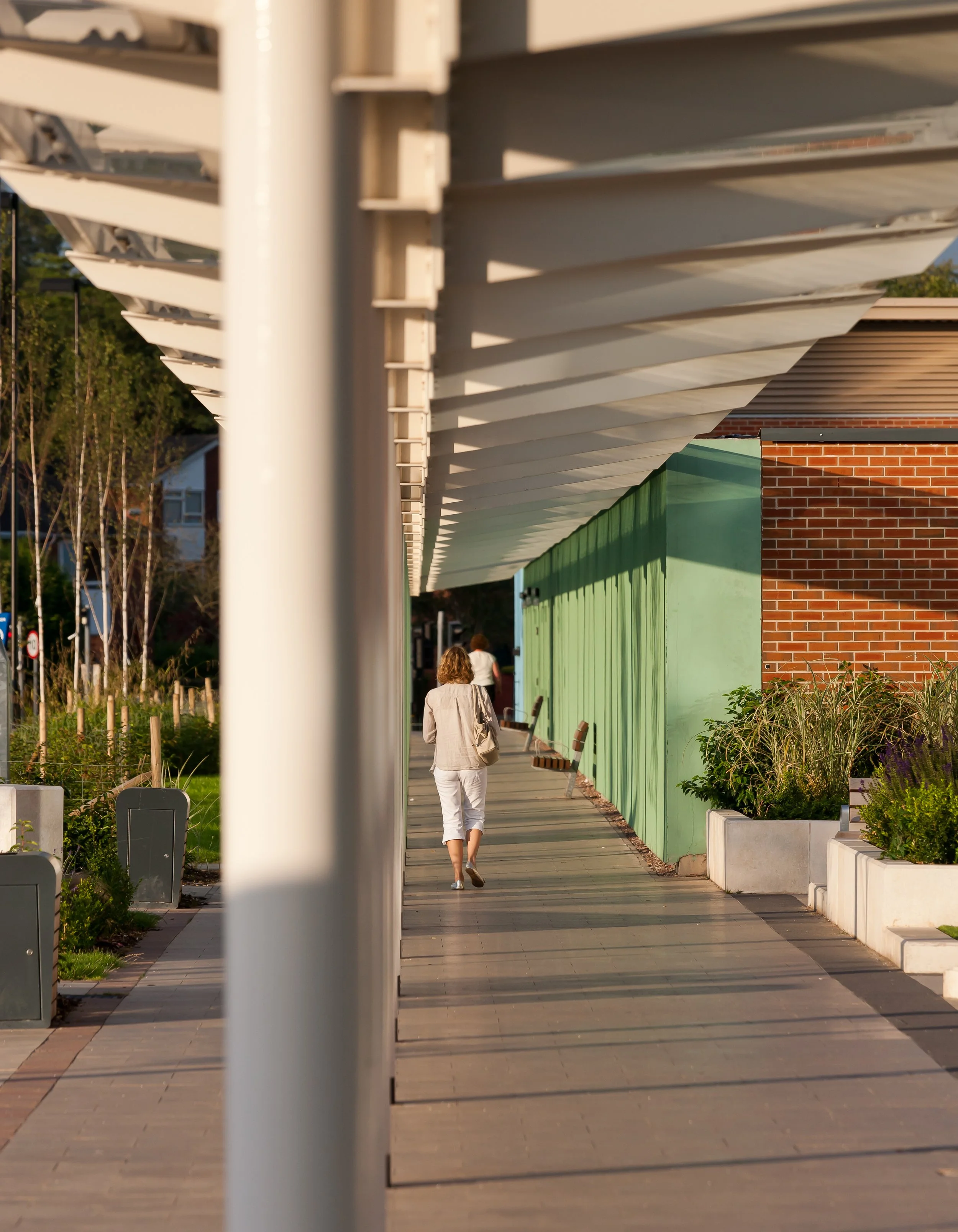
The Gallery Gardens are a central axis that connect both of the above with multilevel glazed gallery walkways enjoying views over gardens. This extends externally with outdoor spaces, covered walkways and a link to local bus services.
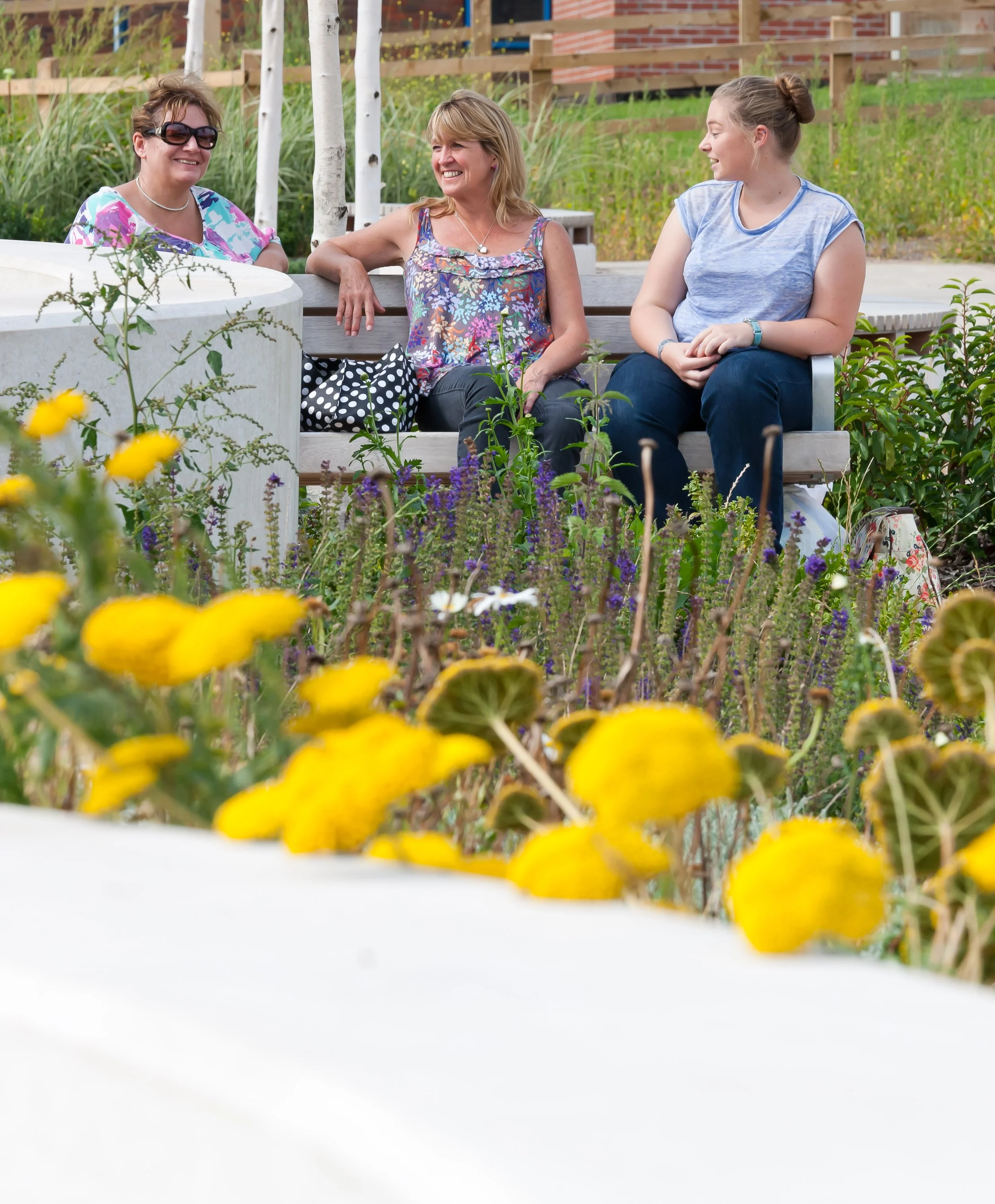
Throughout the site a series of gardens and green seating spaces have been created to reduce stress for the wellbeing of patients, visitors and staff decompress, exercise and socialising in nature to aid retention.
During darkness, lighting makes spaces inviting and safe to use.
Managing significant change of site environment was critical with the mature trees around the Listed Buildings all protected and retained, new native woodland planted to boundaries and connect to wider green infrastructure for wildlife. Lime tree avenues were planted along roads and walkways, creating green canopy fingers connecting to the woodlands. Native hedges buffer car parking areas and gardens offering more ornamental planting with strong seasonal interest and food for pollenating insects.
It is testament to the ambition and commitment of client, designers and contractors that through PFI procurement the scheme was awarded the Landscape Institute’s ‘Best Large Scale Development’.
“Colour formed an intrinsic part of the design team from the outset. Their continual involvement has meant that the landscape proposals formed a natural element to the campus redevelopment. The entire site masterplan, including the basic building footprints, has been the result of the team taking a holistic view of the campus. The external landscape design provides clear passive wayfinding with important public spaces as well as private areas for contemplation or views. This is reflected in the orientation and design of the associated interior spaces.”
John Haworth, architectural director, RyderHKS
LOCATION Newcastle-Under-Lyme
TEAM RyderHKS WSP
CONTRACTOR Laing O-Rourke
STATUS In operation
LOCATION Newcastle-Under-Lyme TEAM RyderHKS WSP CONTRACTOR Laing O-Rourke STATUS In operation
Landscape Institute ‘Best Large Scale Development’
Landscape Institute ‘Best Large Scale Development’